
Wrist Injury Types Explained: TFCC Tears to Carpal Tunnel
Learn about common wrist conditions including TFCC tears, scaphoid fractures, carpal tunnel syndrome, de Quervain's, and ganglion cysts.
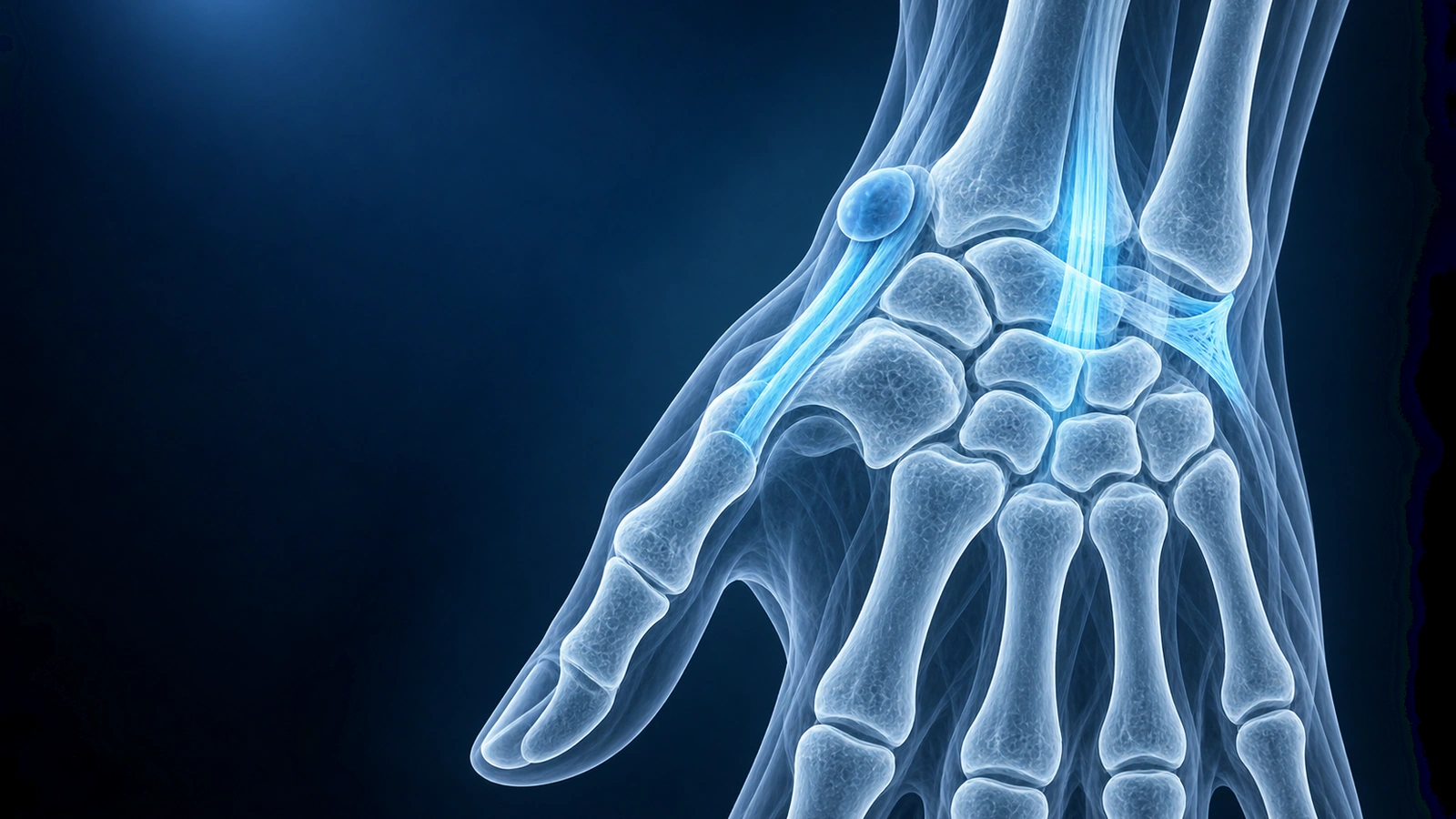
The wrist is one of the most complex joints in the body, consisting of eight carpal bones, numerous ligaments, the triangular fibrocartilage complex (TFCC), and multiple tendons passing through tight compartments. This complexity makes the wrist vulnerable to a wide range of injuries from both trauma and overuse. Understanding common wrist conditions helps patients recognize symptoms early and seek appropriate treatment.
TFCC Tear
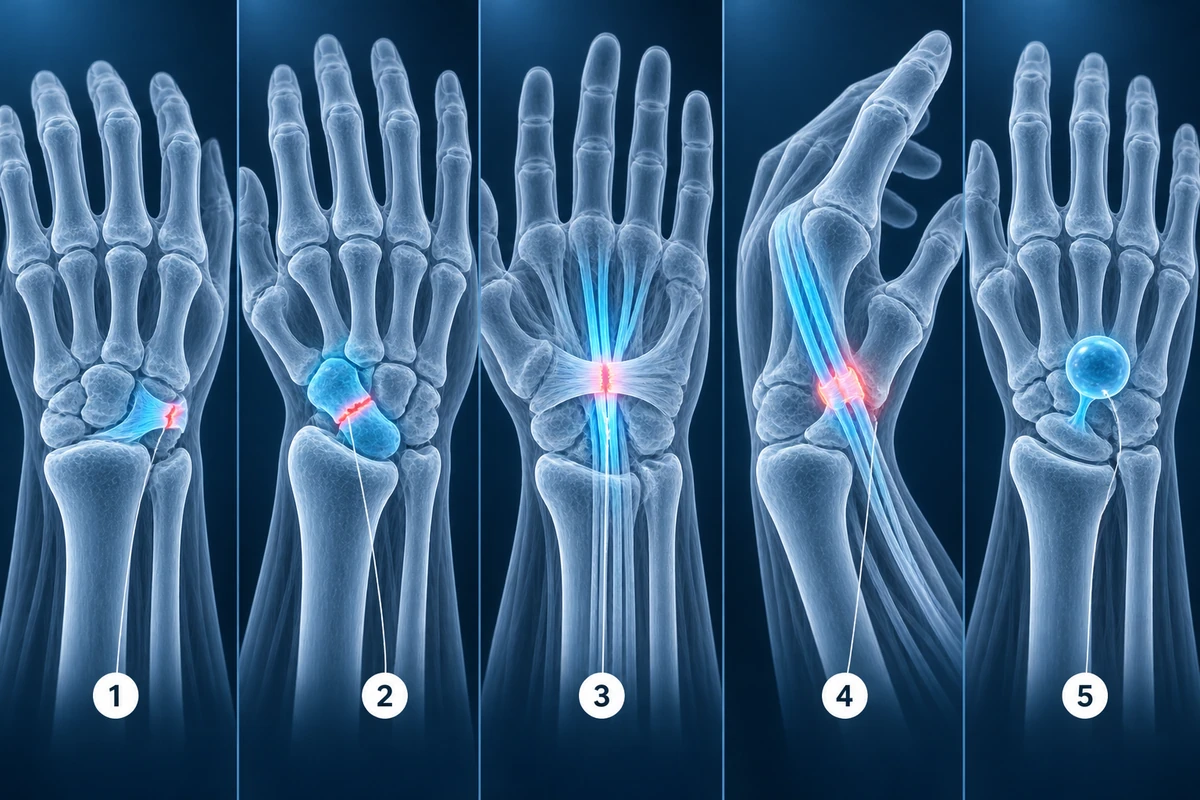
The triangular fibrocartilage complex is a cartilage and ligament structure on the ulnar (pinky) side of the wrist that cushions the joint and stabilizes the distal radioulnar joint. TFCC tears cause ulnar-sided wrist pain, clicking, and weakness with gripping or twisting. Traumatic tears from falls or sports may heal with immobilization, while degenerative tears are common with aging. MRI or MR arthrogram is the primary diagnostic tool. Learn how to identify TFCC tears on imaging in our wrist MRI reading guide.
Scaphoid Fracture
The most commonly fractured carpal bone, the scaphoid is vulnerable during falls on an outstretched hand. The fracture may not appear on initial X-rays, leading to delayed diagnosis. Pain in the anatomical snuffbox is the classic clinical sign. The scaphoid's unique blood supply makes nonunion and avascular necrosis real concerns. For detailed information on healing options, see our article on scaphoid fracture healing without surgery.
Carpal Tunnel Syndrome
Carpal tunnel syndrome occurs when the median nerve is compressed as it passes through the carpal tunnel at the wrist. Symptoms include numbness, tingling, and pain in the thumb, index, middle, and ring fingers, often worse at night. Causes include repetitive hand use, pregnancy, diabetes, and thyroid disorders. Mild cases respond to splinting and activity modification, while severe cases with muscle wasting require surgical release. MRI can show nerve swelling and flattening within the tunnel.
De Quervain's Tenosynovitis
This condition involves inflammation of the tendons on the thumb side of the wrist, specifically the abductor pollicis longus and extensor pollicis brevis. It causes pain with thumb movements, gripping, and wrist deviation. Common in new parents from repetitive lifting and in people who perform repetitive pinching motions. Treatment includes thumb spica splinting, corticosteroid injection (highly effective with 80 percent resolution), and rarely surgical release of the first dorsal compartment.
Ganglion Cyst
Ganglion cysts are the most common soft tissue mass in the hand and wrist. They are fluid-filled sacs arising from joint capsules or tendon sheaths, most commonly on the dorsal (back) wrist. Most ganglions are painless and may fluctuate in size. Treatment ranges from observation (many resolve spontaneously) to aspiration or surgical excision for symptomatic cysts. MRI clearly shows the cystic nature and origin of the mass, distinguishing it from other soft tissue tumors.
Key Takeaways
- TFCC tears cause ulnar-sided wrist pain and may need MR arthrogram for accurate diagnosis
- Scaphoid fractures can be occult on X-ray and carry unique healing challenges due to blood supply
- Carpal tunnel syndrome ranges from mild to severe and treatment depends on nerve compression degree
- De Quervain's tenosynovitis responds well to corticosteroid injection in most cases
Frequently Asked Questions
When should I get imaging for wrist pain?
Seek imaging if you have wrist pain after a fall or trauma (X-ray first), persistent pain lasting more than two weeks, clicking or locking symptoms, numbness in the fingers, or a visible lump. MRI is typically the next step when X-rays are normal but symptoms persist.
Can wrist injuries heal without surgery?
Many wrist conditions respond to conservative treatment. Nondisplaced scaphoid fractures can heal with casting, mild carpal tunnel improves with splinting, TFCC tears may heal with immobilization, and ganglion cysts often resolve spontaneously. The key is accurate diagnosis and appropriate treatment matching.
Related Articles
Decode your wrist MRI report including TFCC evaluation, scaphoid fracture detection, and carpal tunnel findings.
Understand scaphoid fracture healing rates by location, cast treatment versus surgical fixation, and the blood supply challenge.
Related Conditions
Ready to analyze your imaging? Upload your MRI or X-ray for AI-powered analysis
Upload your MRI or X-ray DICOM files for private, AI-powered analysis. 4 models analyze independently — raw scan files stay in your browser.
Start AnalysisMedical Disclaimer: This page is for informational and educational purposes only. It does not constitute medical advice, diagnosis, or treatment. AI-generated analysis may contain errors. Always consult a qualified healthcare professional for medical decisions. Full Disclaimer