
Can a Scaphoid Fracture Heal Without Surgery?
Understand scaphoid fracture healing rates by location, cast treatment versus surgical fixation, and the blood supply challenge.
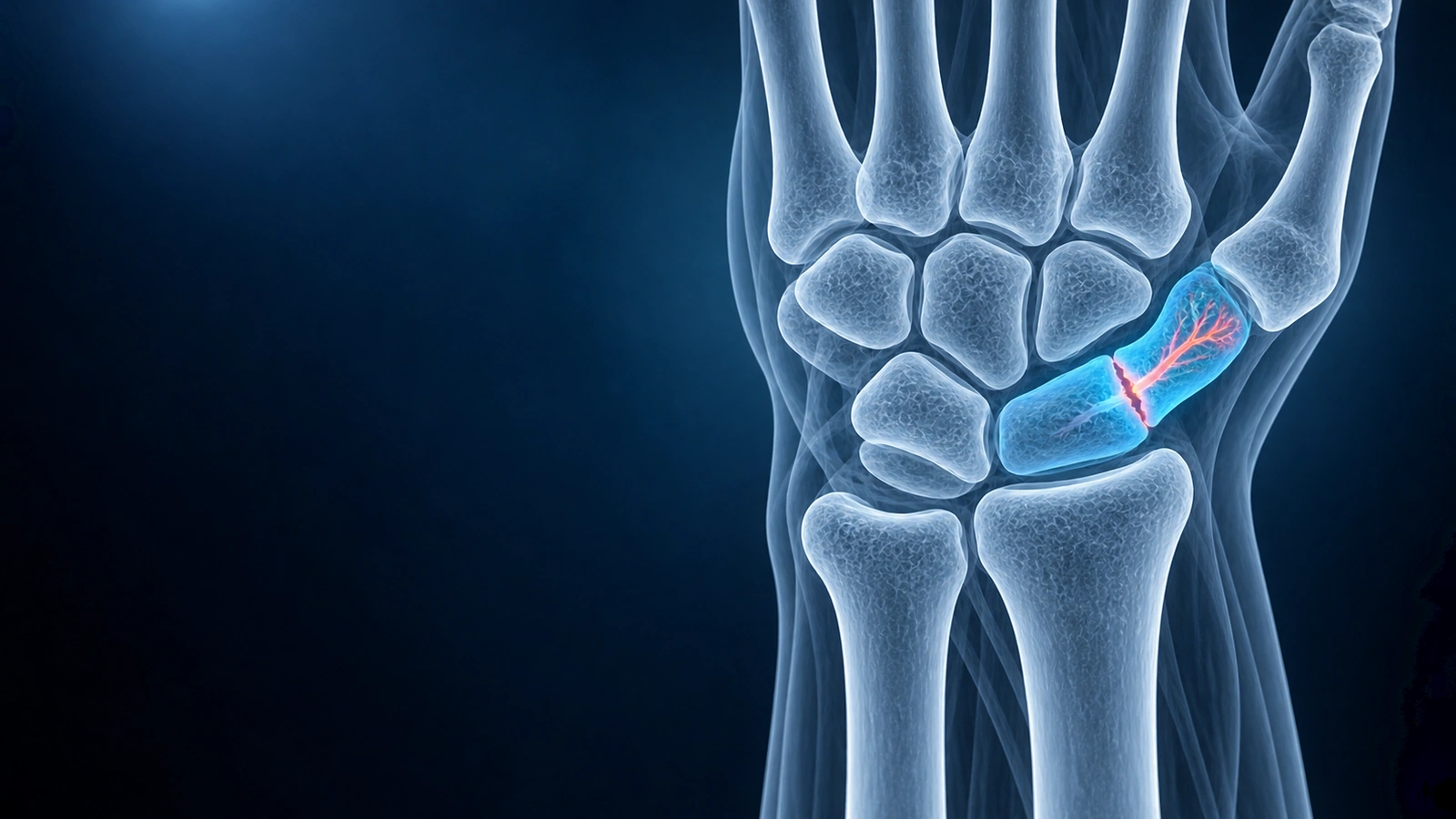
The scaphoid is the most commonly fractured carpal bone, typically injured during a fall on an outstretched hand. What makes scaphoid fractures uniquely challenging is the bone's retrograde blood supply — blood enters from the distal end, meaning fractures through the waist or proximal pole can disrupt blood flow to the proximal fragment. This creates a real risk of nonunion and avascular necrosis if the fracture is not properly managed.
Whether a scaphoid fracture can heal without surgery depends primarily on the fracture location, displacement, and how quickly treatment begins. Understanding these factors helps patients make informed decisions about cast immobilization versus surgical fixation.
Fracture Location and Healing Rates
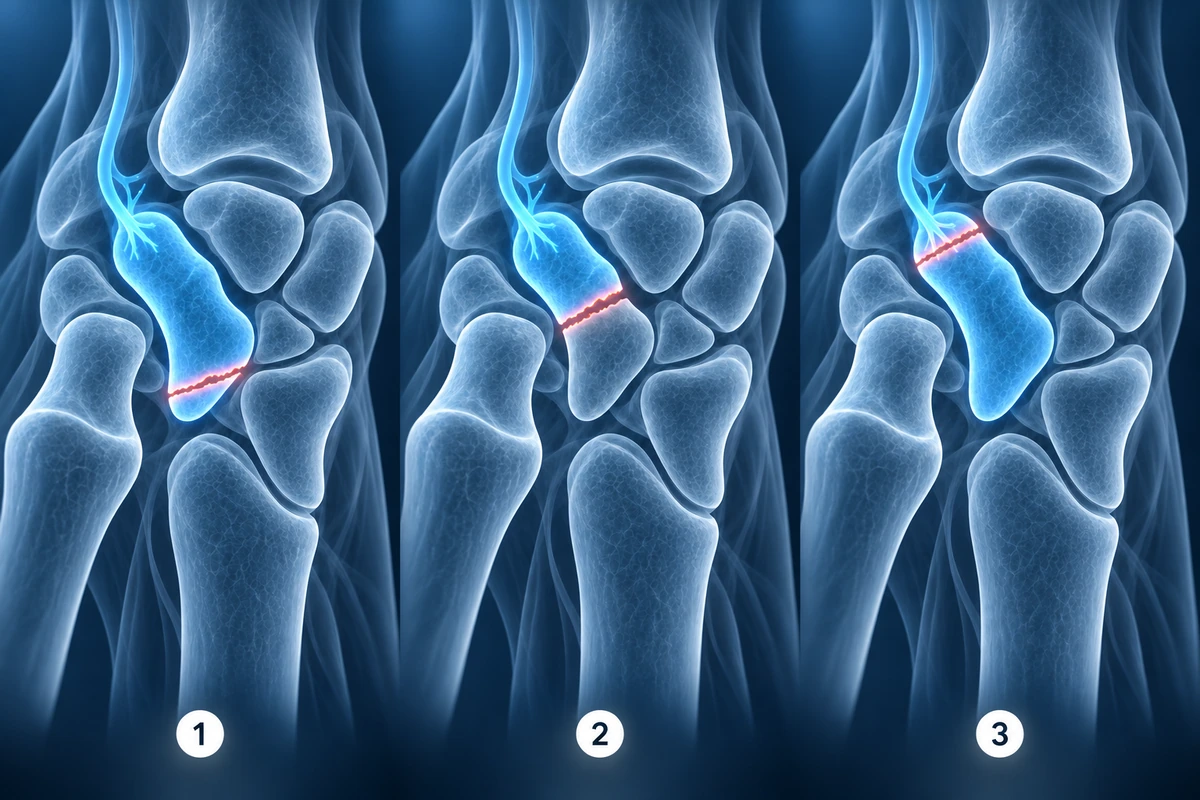
- Distal pole fractures: excellent blood supply, 90 to 95 percent union rate with cast immobilization in 6 to 8 weeks
- Waist fractures (most common): moderate blood supply, 80 to 90 percent union rate with casting over 10 to 12 weeks
- Proximal pole fractures: poor blood supply, higher nonunion rates of 20 to 30 percent, surgery often recommended
For a comprehensive overview of wrist conditions, see our guide on wrist injury types explained.
Cast Treatment
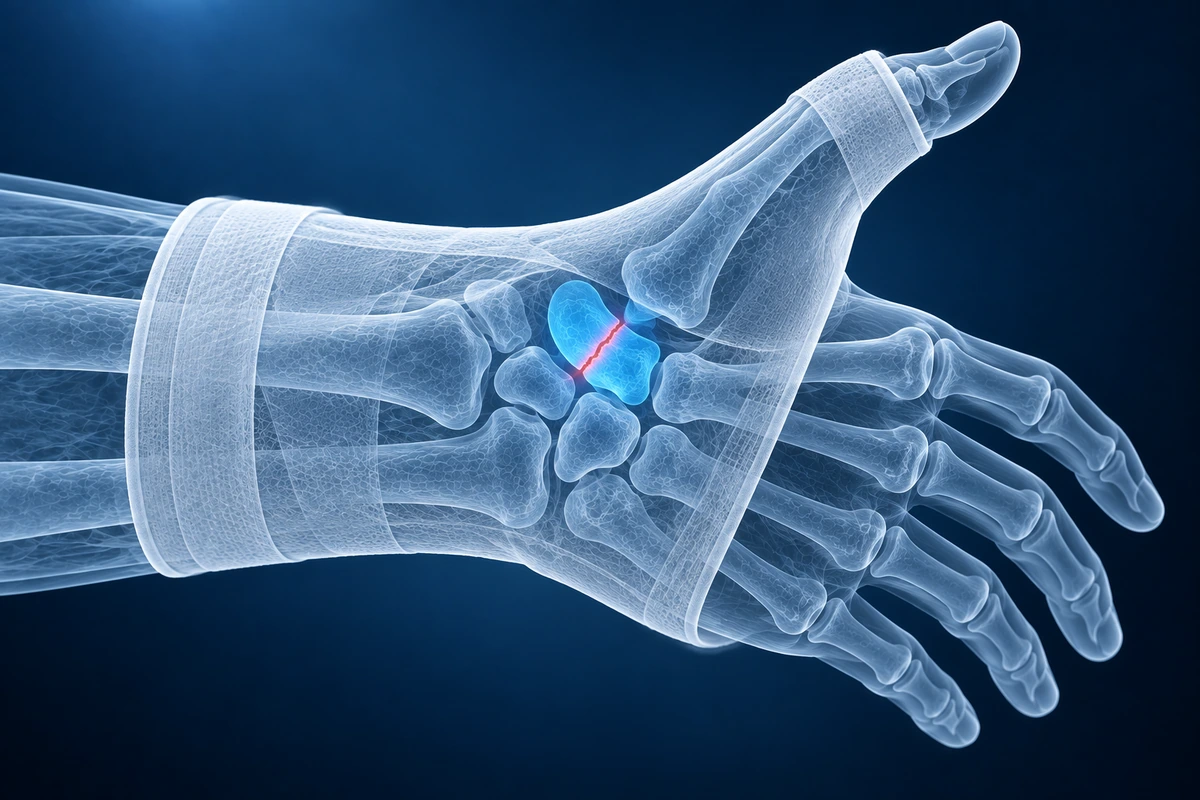
Nondisplaced scaphoid waist fractures are typically treated with a thumb spica cast that immobilizes the wrist and thumb. The cast is worn for 8 to 12 weeks, with serial X-rays or CT scans to monitor healing. Some surgeons use a long arm cast initially for 4 to 6 weeks before converting to a short arm cast. The prolonged immobilization can lead to wrist stiffness and grip weakness that require rehabilitation after cast removal.
When Surgery Is Recommended
- Displaced fractures with more than 1 millimeter of displacement or angulation
- Proximal pole fractures due to high nonunion risk
- Athletes or manual laborers who cannot tolerate prolonged immobilization
- Delayed diagnosis more than 4 weeks after injury
- Associated carpal instability patterns
Percutaneous screw fixation allows earlier mobilization and may produce slightly higher union rates than casting for waist fractures. MRI plays a key role in detecting occult fractures missed on initial X-rays. Learn more in our wrist MRI reading guide.
Key Takeaways
- Nondisplaced distal and waist fractures have good healing potential with cast treatment
- Proximal pole fractures carry higher nonunion risk due to precarious blood supply
- Delayed diagnosis significantly increases nonunion and avascular necrosis risk
- MRI is the best imaging tool for early detection of scaphoid fractures not visible on X-ray
Frequently Asked Questions
How do I know if my scaphoid fracture is healing?
Your doctor will monitor healing with serial imaging, typically X-rays every 2 to 4 weeks. CT scan is the most accurate way to confirm bony union. Clinical signs include decreasing tenderness in the anatomical snuffbox and painless grip strength. Complete healing is confirmed when bridging bone is visible across the fracture line on imaging.
What happens if a scaphoid fracture does not heal?
A scaphoid nonunion can lead to progressive wrist arthritis called scaphoid nonunion advanced collapse (SNAC). The proximal fragment may develop avascular necrosis. Surgical treatment with bone grafting and screw fixation can still achieve union in many cases, though outcomes are better when nonunion is treated early.
Related Articles
Learn about common wrist conditions including TFCC tears, scaphoid fractures, carpal tunnel syndrome, de Quervain's, and ganglion cysts.
Decode your wrist MRI report including TFCC evaluation, scaphoid fracture detection, and carpal tunnel findings.
Related Conditions
Ready to analyze your imaging? Upload your MRI or X-ray for AI-powered analysis
Upload your MRI or X-ray DICOM files for private, AI-powered analysis. 4 models analyze independently — raw scan files stay in your browser.
Start AnalysisMedical Disclaimer: This page is for informational and educational purposes only. It does not constitute medical advice, diagnosis, or treatment. AI-generated analysis may contain errors. Always consult a qualified healthcare professional for medical decisions. Full Disclaimer